
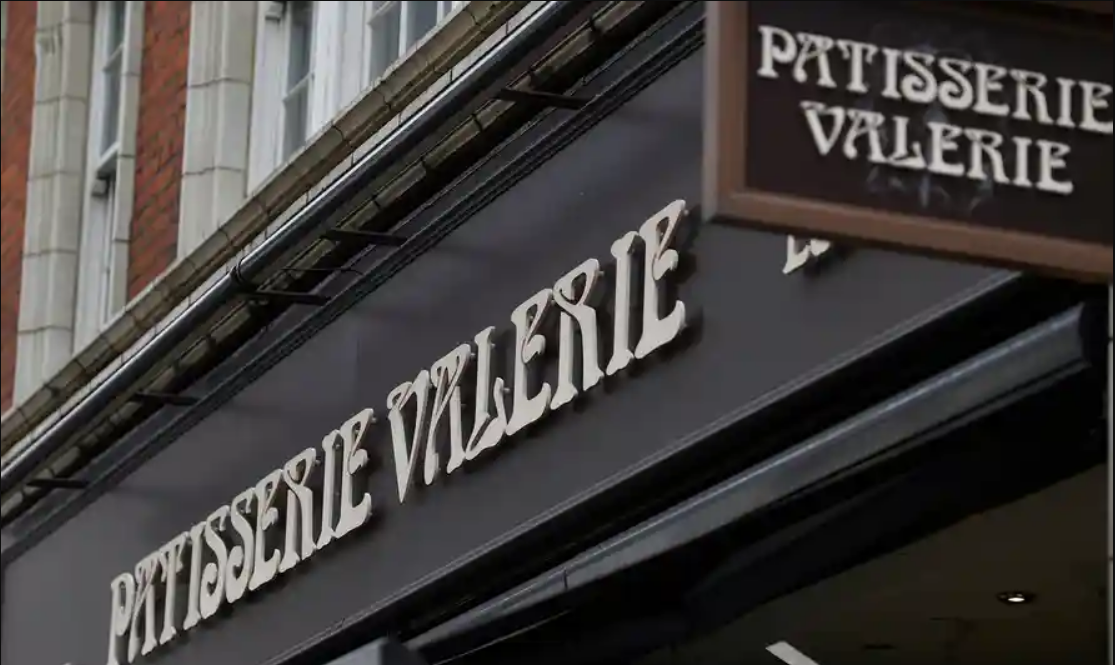

It is a frequent refrain among deception scientists that all people engage in deception, and on average, about twice per day. Most deceptions are harmless and of the social variety, such as, “How are you?” asked of a friend who replies with low energy, “Great.” Typical deceptions are about things we just are not comfortable talking about, including companies not wanting to discuss the underperforming parts of their business. This is why having an objective, scientific assessment of the entirety of the comms of a company is important. Take, for example, the case study of Patisserie Valerie.
About Patisserie Valerie Fraud
Patisserie Valerie is a chain of cafes in the UK that was founded in 1926. According to Wikipedia, on 10 October 2018 trading in Patisserie Valerie stock was suspended after the discovery of potentially fraudulent accounting practices. Because of the gap between its reported financial status and its actual financial statusit needed an immediate injection of capital to save itself. In other words, a crisis materialized almost out of nowhere.
How could a fraud like this have been caught by investors? After all, outright fraud is incredibly hard to detect because investors are reliant on the published quantitative performance of a company. At Deception And Truth Analysis (D.A.T.A.) we have several possible solutions:
- We know from having assessed every quarterly and annual report of US equities dating back to 2008 that the average % of quantitative information in these documents is just 1.7%. Said another way, 98.3% of the contents of these regulatory documents is text. Thus, if you want to detect fraud, you ought to have the ability to assess the qualitative information, too.
- In our work researching the ten largest scandals of all time, we were able to detect deception at these firms with an average lead time of 6.2 years. How is that possible? We are not entirely sure, but our theory is that numbers – which most investors rely upon to assess for possible fraud – are outcomes. These outcomes are driven by management choices. In turn, those choices are driven by managements’ behaviors. Consequently, if you want to evaluate fraud, you should have a way of evaluating the behaviors, such as deception, of management.
myDATA Analysis of Patisserie Valerie
There are several crucial assists provided by Deception And Truth Analysis in an assessment of any company:
- Our myDATA product allows almost any document to be assessed for its level of deceptiveness and truthfulness.
- DATAREDline provides a running assessment of deceptiveness and truthfulness through documents so investors can identify where a company is being deceptive, and where it is being truthful.
- Assessing multiple documents in time series provides investors with key insight about the changes and evolution of narratives at a company through its operating history.
D.A.T.A.’s myDATA assessment of Patisserie Valerie’s formally filed “Group of Companies Accounts” (i.e. UK companies annual report) found DATA Scores of:
- 2014 = +21.20%, with 1 deceptive document fragment
- 2015 = +16.86%, with 2 deceptive document fragments
- 2016 = +16.98%, with 2 deceptive document fragments
- 2017 = +17.24%, with 5 deceptive document fragments
D.A.T.A. Scores range between -100% and +100%, with any negative score indicating a level of deceptiveness, and any positive score indicating a level of truthfulness. Extreme scores are harder to achieve and scores are roughly normally distributed with a mean of 4.90%.
[Note: After 2017, Patisserie Valerie did not issue a Group of Companies Accounts report. Thus, any harbinger of fraud would be contained in the regulatory filings in the lead up to the fraud.]
Given that Patisserie Valerie’s Group of Companies Accounts scored in the aggregate as truthful, it may seem as if D.A.T.A. has not provided an assist. The devil, as they say, is in the details. Why? Because most people and companies deceive, just a little. What they deceive about is what is important. So, what was Patisserie Valerie being deceptive about?
DATAREDline Analysis of Patisserie Valerie
2014 Group of Companies Accounts
In 2014 there was only one fragment that scored as deceptive in Patisserie Valerie’s Group of Companies Accounts. That fragment scored -4.27%, placing it within one standard deviation of the mean document score of 4.90%.
Issues discussed in this one deceptive fragment include:
- Increases in tangible and intangible assets.
- A narrative around operating cash flows and why they were lower for the year.
- How new stores are evaluated via cash payback and that all new stores are performing as expected.
- Key risks faced by the company.
By our reckoning the level of deceptiveness shown here is interesting, but not something of high concern.
2015 Group of Companies Accounts
2015 featured two fragments in Patisserie Valerie’s annual report that scored as deceptive, though barely so.
Deceptive Fragment 1 scored -1.85%, placing it within one standard deviation of the mean document score of 4.90%. Discussion in the fragment included:
- Composition of the audit committee.
- Additional disclosure about the company’s internal controls, including, “…such a [internal control] system is designed to manage rather than eliminate the risk of failure to achieve business objectives and can only provide reasonable and not absolute assurance against material misstatement or loss.”
- New store openings.
- A discussion of the company’s income statement expenses.
Patisserie Valerie’s second deceptive fragment scored as just slightly deceptive. Topics covered in this fragment include:
- How new stores are evaluated via cash payback and that all new stores are performing as expected.
- Disclosures around operating cash flow.
- Key Performance Indicators and how the company stacked up relative to them.
- How new stores are evaluated via cash payback and that all new stores are performing as expected.
- Key risks faced by the company.
In our opinion, once again, the level of deceptiveness in these statements does not rise to the level of criticality. However, that the company is scoring as deceptive about its internal controls would certainly catch most investors’ attention. Last, it is important to realize that several of the sections in the 2015 annual report are identical to those in 2014.
2016 Group of Companies Accounts
For 2016 Patisserie Valerie also had two fragments in its annual report that scored as deceptive. What is different though is the magnitude of the deception. Instead of being within 10% of the mean D.A.T.A. Score of 4.90%, now the D.A.T.A. Score fragment one shows increases in deceptiveness, up to -13.59%. This is the first time that Patisserie Valerie scores one standard deviation below the mean. So what are they discussing in this fragment?
- Changes made to their logistics arm.
- The importance of employees to the company.
- Company performance, including delivering 10 consecutive years of growth.
- Success at opening 21 new stores.
- Revenues and operating profits.
- Cash on hand at the end of the year.
That the company’s deceptiveness saw a marked increase and around these crucial operating issues (e.g. operating profits and cash on hand) is noteworthy.
Patisserie Valerie’s second deceptive fragment scored -5.88% and contained narrative around the following issues:
- The performance of the company’s Cash Generating Units.
- Allowances for impaired receivables, including, “There is no material difference between the fair value and the carrying value of these assets.”
- There being no history of inventory impairment.
- Its operating lease commitments.
- The company options programme.
- Patisserie Valerie’s “overdraft facility.”
The above deceptive fragment has a number of interesting and new disclosures regarding new working capital, such as impaired receivables and inventory impairments, as well as its “overdraft facility.” Combined with the above deceptive fragment, it is natural to conclude that management is being deceptive about its cash.
2017 Group of Companies Accounts
Among the first things to note about Patisserie Valerie’s 2017 annual report is the large increase in the number of fragments featuring deceptive language: from two fragments in previous years, to five.
Patisserie Valerie’s first deceptive fragment scores -6.69% and is close to a standard deviation below the mean of 4.90%. In this fragment they discuss:
- Their various brands.
- New store openings.
- Biographies of the C-suite.
- Its corporate governance and internal controls.
In its second deceptive fragment, Patisserie Valerie scored -8.44% and they have disclosures around the following topics:
- A bit of their ESG disclosures.
- Investments in their logistics.
- The importance of their employees.
- Its ability to continue delivering record sales and profits.
- Board strategy for growth and new store openings.
- Narrative around its revenues, expenses, and profits.
- Operating cash flow generating ability.
- Net cash at the end of the year.
These first two deceptive fragments both feature repeats from prior years. In other words, the above two lists remain perennial issues at Patisserie Valerie. The company’s third deceptive fragment in 2017 scored as just slightly deceptive and featured stories about:
- KPIs.
- Business risks.
- Insider ownership.
- A very curious disclosure of, “The directors have a reasonable expectation that the group will continue in operational existence for the foreseeable future and have therefore used the going concern basis jn preparing the financial statements.”
- Another very curious disclosure of, “The Group uses various financial instruments, these include cash and various items such as trade debtors and trade creditors that arise directly from its operations.”
- Last among these liquidity disclosures is, “The Group seeks to manage financial risk by ensuring sufficient liquidity is available to meet foreseeable needs and to invest cash assets safely and profitably. Short term flexibility is achieved by overdraft facilities. The risks are managed by overdraft facilities and availability of a capital drawdown facility thus reducing exposure.”
First, what is especially interesting about these disclosures is just how direct they are in disclosing impending problems at the company. The above disclosures were scored as slightly deceptive, and close to truthful. Hmmm. This report from Patisserie Valerie was issued by the company on 13 February 2018 and well in advance of their being delisted on 10 October 2018. We think you will agree that the above statements were measured by D.A.T.A. as deceptive is important. But wait, there’s more!
Patisserie Valerie’s fourth deceptive fragment scored as -8.53% and included disclosures about:
- Evaluation of the company’s Cash Generating Units.
- Impaired receivables, including a statement that, “remaining balances were not past due. There is no material difference between the fair value and the carrying value of these assets.”
- No issues with inventory turnover.
- Disclosure about end of year cash balances.
- Stock options.
Again, the above list of issues are repeats from prior years. This suggests that these issues persist at Patisserie Valerie.
Patisserie Valerie’s final deceptive fragment scored as just barely deceptive, in which they discuss:
- Profit margins.
- Counterparty credit risks.
- “The Group currently holds cash balances to provide funding for normal trading activity. The Group also has access to both short term and long term borrowings to finance individual projects.”
- Financial reporting standards utilized.
- The fact that the company has not disclosed a cash flow statement.
We believe the most interesting disclosure above is the disclosure around cash on hand, as well as the company’s access to short-term borrowings.
Conclusion
Deception And Truth Analysis would very likely have provided a valuable assist to investors in Patisserie Valerie, as well as to its regulators. This is demonstrated by it having quickly and ably identified the following key deceptive issues consistently:
- The company’s governance and internal controls.
- The company’s net working capital, including deception about its receivables and inventories.
- The company’s cash flows.
- The success of the company’s growth strategy.

0 Comments